DISSERTATION
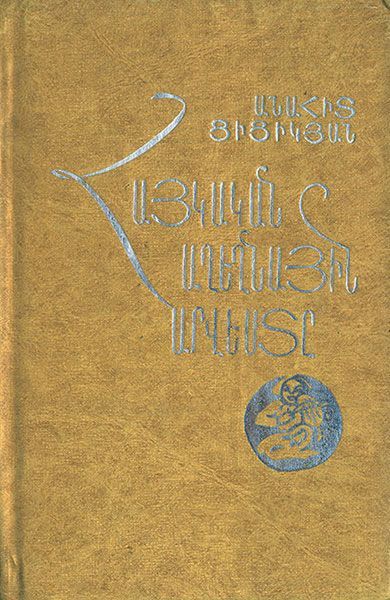
FROM THE HISTORY OF ARMENIAN BOWING ART
Dissertation for Academic Degree of Art, Ph. D
Institute of Arts of the Academy of Sciences of the Armenian SSR, Yerevan 1969
Author's abstract։ This is the first study of the still unexplored scientific area of the musical culture of Armenia - the Armenian bowed art.
Chapter I. Origins of Armenian Bow Art:
- Study and description of early bow instruments – ancestors of the violin, found in Armenia. One of the earliest examples in world art, an X century image of an ancestor of a violin and the first reference to the violin (jutak) by X century poet Grigor Narekatsi.
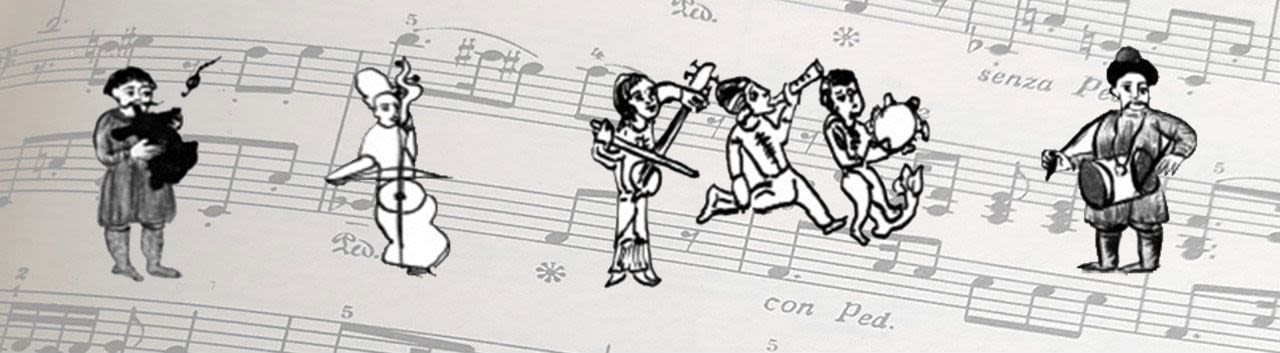
- Information on strings and their production in Armenia in the same historical period. Medieval bow in ancient Armenian Miniatures
- Study of problems in musical aesthetics, performance in the works of medieval Armenian scholars, thinkers, and musicians.
- Spread of instrumental performance in the Middle Ages. The joining of musicians into unions, and societies. Sayat-Nova and the generation of ashugs (wandering minstrels) developing their traditions.
- Universalism of the enlightened scholars of XVIII century, treatises of music, development of professional performance.
Chapter II. Development of Armenian Bow Art and Performance in the XIX Century:
- Creative portraits of virtuoso musicians – representatives of the classical oriental instrumentalism, Sepuh, Khudaverdi, Tadevos and others. Also, representatives of professional bow art, enriched with European unicersal techniques - Grigor and Harutyun Sinanian, Aharon Msrlian and others.
- Establishment of the first Armenian Symphony Orchestra, its importance in the musical life of the countries of the Middle East.
Chapter III. Two Branches of Armenian Performing Art Development:
- Western Armenian branch associated with European performing schools. Eastern Armenian branch associated with Russian art.
- Creative portraits of Davit Davtian (the first Armenian laureate - Brussels, 1904), Hayk Kyutenian, Kisak Vruir (students of Cesar Thompson), and Ivan Nalbandian (disciple of Auer) and others.
Conclusion:
Summaries on the process of Armenian bow art development (up to the Soviet Period) and its place and significance in the musical culture of Armenia.